Monday, February 21, 2011

T-Mobile Alters its Wireless Contract Early Termination Policy

Here's a mobile phone contract update for T-Mobile subscribers. The carrier appears to have changed its policy towards the Early Termination Fees (ETF) for its mobile phone contracts.

The new T-Mobile Early Termination Fees (ETF) policy indicates that consumers that are moving out of the carrier's coverage area or overseas will be charged with the fee. However, customers moving overseas due to military deployment will not be charged with an ETF.

This T-Mobile Early Termination Fees (ETF) policy change took effect on February 8th, 2011. This means that consumers who cancelled service (without paying the ETF) before February 8th will not be charged with the fee.

So why did T-Mobile enforce this new cell phone contract policy? Well, the word on the street indicates that the change was made to discourage the abuse by some consumers who are specifically moving out or signing contracts before they knew they were moving overseas.

What do you think of this change? Do you think that it's fair?

Stay tuned for more wireless contracts news and information.

Monday, February 14, 2011

No-Contract Android Smartphones

A number of consumers have shied away from handsets that are paired with cell phone contracts in an attempt to save money. However, no-contract phones are usually simple devices that are meant for occasional users. Fortunately, the landscape has changed and t is now possible to purchase a solid Android smartphone without being tied to a mobile phone contract.

Let's look at the no-contract Android smartphones that are available in the market.

Huawei Ascend
Cricket Wireless and MetroPCS are offering the Huawei Ascend as a prepaid Android smartphone. Features for this phone include 3.5-inch HVGA display, Swype keyboard, a 3.2-megapixel camera, a 16GB card slot, and supports 3G and Wi-Fi.

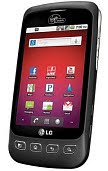
LG Optimus V

The Optimus M is available via Virgin Mobile for only r $149.99 off-contract. The features for this no-contract Android smartphone include Wi-Fi, GPS, EV-DO Rev. A, stereo Bluetooth, and a 3.2-megapixel camera.

LG Optimus M

The main features for this phone include Wi-Fi, EV-DO Rev. 0, GPS, a 3.2-megapixel camera, and Bluetooth. The Optimus M was launched with a price of $229 with no contract.

There you go. Three solid smartphone that can be purchased without a cell phone contract. If you don't want to be bothered with ETFs, credit checks and other fees, then check out these handsets.

Monday, January 31, 2011

Sprint Surcharges, Taxes, Fees and other Charges

A look at your monthly mobile phone bill will tell you that one needs to pay for surcharges, taxes, fees and other charges in addition to your usage. You are obligated under you cell phone contract to pay these surcharges, taxes, fees and other charges. However, understanding and knowing about these charges may one understanding the need to pay for them. Let's look at some of these charges that are included in your Sprint monthly bill.

Now, these surcharges, taxes, fees and other charges may vary according to your wireless service and your geographical location.

Administrative Charge: this fee is applied per line, per month by Sprint to help defray various costs imposed on Sprint by other telecommunications carriers. It not required to be collected by law and the calculation for this charge are subject to change from time to time.
Regulatory Charge: This fee is collected to help defray costs of various federal, state, and local regulatory programs. It not required to be collected by law and the calculation for this charge are subject to change from time to time.

Gross Receipts Recovery: This fee is charged to recover receipts taxes and excise imposed by some states, counties, and cities. It not required to be collected by law.
State & Local Taxes: Some States, counties, cities, and special taxing districts assess various taxes on Sprint communication services and/or the sales and rentals of wireless phones. These charges are remitted to the jurisdiction that is assessing the tax.

State & Local Required 911 Charges: Some states and localities require wireless carriers to collect a fee for 911 funds. These fees vary by state and locality.

Federal & State Universal Service Fund Assessment: All interstate telecommunications service providers are required to contribute to the Federal Universal Service Fund (USF) and some states may require Sprint to contribute to a State Universal Service Fund (USF).

These are just some of the surcharges, taxes, fees and other charges that are included in your monthly bill. I hope you'll get a better understanding of these fees after this post.

Stay tuned for more mobile phone contract related topics.

Monday, January 24, 2011

Android Update Delay Causes Class Action Suit Against Samsung and T-Mobile

It's has been some time since we featured class action suits in this blog. The last one was on November of last year. But here's a new one filed against the 4th largest US carrier. This new class action suit filed against T-Mobile also involves Samsung and one of the manufacturer's most popular handsets.

If you own a smartphone, then you probably know that software update releases can take a long time. Now, were not talking about fix updates but new versions of operating systems. The Samsung Galaxy S has been notorious for delays in software updates. In this case it's T-Mobile's versin of the Galaxy S, the Samsung Vibrant.

It appears that one user has finally had enough and has filed a filed a class action lawsuit against T-Mobile and Samsung. This complainant claims that both companies have violated the law concerning Unfair and Deceptive Consumer Business Practices. The suit argues that these telecom companies have the deceived users regard ing the hardware, and software reliability of the Samsung Vibrant.

So do you think that this class action suit is valid?

I think that it shows that smartphone users are concerned with OS update delays. After all, no one wants to be stuck with a device with outdated and defective software.

Tune in to this blog for more issues on mobile phone contracts and related topics.

Monday, January 17, 2011

Verizon Wireless Ends its "New Every Two" UPgrade program

The start of 2010 brought some major changes in the US mobile phone arena. Of course, the coming of the CDMA iPhone for Verizon Wireless is the biggest one so far. However, Verizon also delivered some disappointment when it informed subscribers of the end to the popular "New Every Two" upgrade program.

But what is the "New Every Two" program anyway? Well, this program offers Verizon subscribers a credit of $30 to $100 toward a new phone every two years. So you see why it has become quite popular.

Unfortunately, this program will halt as of January 16. The company will stop offering the credit to new customers and won't re-enroll current customers in the program. Consumers can also say goodbye to the early upgrade program.

Brenda Raney, a spokeswoman for Verizon Wireless, has indicated that the carrier plans to shifting to a "simpler program" in which customers will be offered promotions and discounts directly. She stated in an email that "We are a retail business so the New Every Two promotion is evolving to be more in line with how retailers work with customers today. This will include promotional offers via e-mail based on preferences that are more tailored to customers' needs."

This means that customers signing up after January 16, they will not get to access this program. However, Verizon Wireless customers under contract prior to January 16, 2011, who meet the qualifications for New Every Two program will be grandfathered so they can use the benefit one more time.

That's it for this update. Tune in next week for more wireless contract related news and updates.

Monday, January 10, 2011

T-Mobile's Phone Return and Replacement Policy

Thousands of consumers each year go though the process of returning or asking for a areplacement for a handset vis their wireless carriers. This process can be triggered by a number of reasons including defective phones or damaged handsets.

But what are the carriers' policy towards returning phones and replacement handsets? Well, let's look at T-Mobile's phone return and replacement policy.

If you want to a newly purchased T-Mobile cell phone then you have 14 calendar days (30 in CA) from the date of purchase to return the handset. However, the mobile phone must be good working condition with original contents and packaging. Otherwise, you won't be eligible for a refund of the purchase price. One must also present a proof of purchase and a restocking fee may be charged.

Yu can return a defective phone and ask for a replacement if its is still under warranty. Remember that you need to return the defective phone to T-Mobile to complete the exchange. IF YOU DO NOT RETURN THE DEFECTIVE PHONE WITHIN SEVEN (7) DAYS, YOU WILL BE CHARGED T-MOBILE’S REPLACEMENT FEE FOR THE NEW PHONE.

If the handset is found to be outside the warranty period and/or is physically damaged then you will need to pay a replacement charge for the value of the phone. A new T-Mobile phone, it is under warranty for 12 months from the activation date on the T-Mobile network or the date of receipt, whichever is earlier. If you purchased a refurbished T-Mobile phone, then it is under warranty from either 90 days of receipt or the remainder of your 12-month service agreement, whichever is longer.

A T-Mobile cell phone is considered defective if it has stopped properly functioning due to no fault of the user.

But what about if an upgraded T-Mobile phone does not meet your expectations? Well. you can return the phone plus all associated original contents, undamaged and in good working condition, within 14 days from the day you received it.

If your mobile phone has been lost or stolen then you should read this:
Call Customer Care immediately to suspend your service. If your phone was stolen, please provide the Customer Care representative with the police report number (if available). Ask Customer Care about phone or SIM card replacement options that may be immediately available to you.
You will be charged for any call charges made prior to when you reported your phone as stolen and you will receive a credit for any charges made after you reported the phone as stolen. Your monthly bill will be prorated based on the time that your account is suspended.
Once you have called Customer Care to report the phone as lost or stolen, your service will be suspended for up to a maximum of 30 days. If your phone has not been recovered within this time period, your current account will be cancelled to prevent any possible misuse. To avoid account cancellation, call Customer Care regarding your options for replacing the lost or stolen phone.

That's if for this post on T-Mobile's phone return and replacement policy. Stay tuned as we tackle other important wireless contract policies and related topics.

Monday, December 20, 2010

How to View Your AT&T Contract End Date

When does my contract end? When does my service expire? When is my service end date? These questions often cross the mid of subscribers who are nearing the end of their mobile phone contract. Well, here's some useful news for AT&T subscribers.

I've dug around the AT&T website and found some steps on how to know or find out the end date for your contract. It's quite simple and no complicated steps are necessary. Here are the simple steps.

  1. Log in to your myWireless Account.
  2. From the Account Overview page, select My Profile.
  3. Select the User Number Information tab in the center of the page. Your contract end date can be found under the Contract Information section.
  4. For more information on account cancellation, select the Early Termination Fee link at the bottom of the page.
If you have multiple phone lines on your account, you must select the phone number associated with the User Information you would like to view.

Of course, a subscriber must be registered and logged in to myWireless Account to view this wireless contract information.

That's it for this post. We hope that this wireless contract information will help one to find out about your mobile phone contract end date. Stay tuned as we tackle similar topics n this blog.

Monday, December 13, 2010

Verizon Wireless Contracts and Relocation

Relocation appears to be a major concern for mobile phone contract customers. And rightfully so since coverage and network strength may vary greatly from one area to another. Fortunately for Verizon Wireless contract consumers, the carrier has devoted a program to deal with this eventuality.

The Verizon Wireless Customer Relocation program caters to customers moving from one area to another. It handles the complications that relates to mobile phone contracts of consumers who decide to relocate to another area.

Relocating Consumers should contact Customer Service at (800) 922-0204 and a representative will help determine what changes need to be made on the account.

But the big question is, will you need to sign a new Verizon Wireless contract when you relocate?
Here is the carrier's answer:
It depends on the plan type. If you are keeping the same plan and promotion in the new market as the old, your contract will not be extended. The contract, however, will be extended if you purchase equipment at our discounting prices, or accept a new promotion.

But what about fees? Well, there are no fees for changing your calling plan or your area of use. However, prorate charges will apply if you change your service.

Check out the Verizon Wireless Customer Relocation program if yu have more questions.

That's it for this post. Tune in next week for more mobile phone contract information and related news.

Monday, December 6, 2010

AT&T No-contract Phones and Plans

A large number of consumers are expected to choose prepaid services over mobile phones and plans with wireless contracts. So I thought that it would be interesting to look at some no-contract offers in the market.

AT&T is one of the major wireless carrier's in the US and it offers both no-contract offerings as well as mobile phones and plans that require a contract. his time let's take a quick look at AT&T no-contract phones and plans.

The carrier's prepaid program is called GoPhone. This prepaid mobile phone service is divided into Pick Your Plan and Pay As You Go.

The Pick Your Plan program is no longer available for new customers but existing Pick Your Plan service accounts are still being supported.

The Pay As You Go prepaid program provides no-contract phones and plans. Consumers can refill airtime at their leisure by purchasing prepaid cards. They can also purchase airtime packages available through the AT&T refill site.

These are the advantages of the Pay As You Go prepaid program:
  • No long-term contract and no credit check
  • No bills to pay and no age requirements
  • Unlimited calling to anyone nationwide on select plans
  • No long distance fees across our national service area
  • Usage tracking
  • 24/7 account refills
But what about the cellphones. Well, the AT&T GoPhone program offers a selection of new or refurbished cell phones and devices and choose from a wide variety of styles and manufacturers. Many of them can be purchased for less than fifty bucks.

That's it for this quick preview of AT&T no-contract phones and plans. Join as every week as we look at mobile phone contract or wireless contract news and updaes.

Monday, November 22, 2010

One in Five Wireless Contract Cosumer to Switch to Prepaid

It appears that the decline in consumers committing to wireless contracts is still continuing. A study conducted by Infogroup for the New Millennium Research Council indicates that 20 percent of wireless customers (estimated to be about 24.6 million adults in the U.S.) will move to "less expensive unlimited prepaid wireless service with no early-cancellation penalty" at some point within the next six months.

Last year's study estimated the number at almost twenty percent.

The reasons for abandoning mobile phone contract offers? Well, its about cost. Most prepaid plans are cheaper than contract offerings.

Interestingly, 10 percent of respondents said they would switch to a prepaid plan if they weren't "subject to an early-cancellation penalty." his indicates that the infamous early termination fee or ETF for mobile phone contracts are successful in encouraging consumers to be faithful to their agreements.

So what can carriers do to keep their customers from switching to prepaid deals? Well, the study shows that unlimited talk, text, and Web or e-mail access for $50 a month with no penalty will do the trick.

Will this trend continue next year? Stay tuned as we bring you the latest news and updates on wireless contracts and related topics.

Wednesday, November 17, 2010

AT&T Settles In Class Action Suit Over Fees and Taxes

Here's some good news for Cingular/AT&T customers who paid for mobile internet services between November 1, 2005, and September 7, 2010. The carrier has decided to settle the conflict over collected taxes on mobile data plans.

The carrier was hit with a class action lawsuit filed over the improper collection of some taxes and fees. Apparently, AT&T collected the fees and taxes even after some states and local governments ceased requiring the payment of certain taxes on mobile data plans. Thus, a class action suit was filed.

The U.S. District Court for the Northern District of Illinois granted preliminary approval of the settlement on Aug. 11, 2010, and the carrier has requested the judge to issue a final approval of the settlement.

AT&T denied any wrongdoing in a statement to the folks at Phonescoop,
"AT&T Mobility collected only those taxes that we believed we were required to collect, and turned them over to the appropriate taxing bodies. We strongly deny any wrongdoing, and no court has found that AT&T Mobility committed any wrongdoing. However, we agreed to settle these cases to avoid the burden and cost of further litigation, and to facilitate any tax refunds that we may be able to obtain for our customers."
So what is the result of this settlement?

Well, AT&T will no longer charge some taxes and fees on data plans. The carrier will refund its customers from whatever monies are reimbursed by the state and local governments involved.

Do you think that you deserve a piece of this settlement? Consumers that take Data Connect Plans (wireless Internet on your PC), Smart-phone Data Features bolt-ons, smartphone data plans, iPhone data plans, personal Blackberry plans, or enterprise smartphone plans are all potentially included in the settlement.

That's it for this update. TUne in o more wireless contract related news and updates.

Monday, November 8, 2010

Cell Phone Contracts and Taxes

A cell phone bill contains information that can cause confusion among consumers. The taxes included in your bill are a good example of this especially for consumers who have recently transferred to another state.

Taxes and governmental fees are included in your bill. That's why your residential or business street address is very important because it allows a carrier to determine which jurisdiction's taxes and assessments to collect for you cell phone bill. This information is emphasized in your mobile phone contract.

On average American cell phone consumers are taxed 15.75 percent on every month's cell phone bill. This average percentage includes state and local taxes as well as federal taxes.

Now, calculating the cell phone tax that goes into your bill may not be accurate. This means that a carrier may be overcharging you. Of course, it may also mean that you are being charged less than the amount that you should be charged.

So how do you know that a carrier isn't over charging you with taxes?

Well, you need to know that you are paying for several cell phone taxes. Your bill includes the federal tax, which is about 5.05 percent of your phone bill a and is used to fund the Universal Service Fund.

Then there are state taxes and local taxes and fee. Some states also include a sales tax ands add fees for e911 service. Refer to MyWireless.org to get the average state and local tax rates for your residence.

You may contact your carrier if you feel that you are being overcharged with the taxes on your bill. It's the carrier's responsibility to charge you the correct tax based on your billing address. A refund is justified if a carrier is not applying the appropriate rates.

That's it for this pice of info on cell phone taxes. Tune in next week for more information on cell phone contracts and related topics.

Monday, October 18, 2010

The Anti-Bill Shock Rules

There have been recent talks of the FCC's efforts to lessen the occurrences of bill shock. But what is "bill shock" anyway and why should consumers be concerned over it.

Well, here's a good illustration of bill shock from Cnet:
When Kerfye Pierre returned home to Maryland from a visit to Haiti in February after the devastating earthquake, she received yet another shock: a $30,000 phone bill from T-Mobile USA.

Pierre, who had gone to Haiti to visit her sister who was having a baby, was there when the earthquake struck in January. Before her trip, she had suspended her phone service to avoid expensive charges. But after the disaster struck, she was told by a T-Mobile representative that she could use a courtesy plan that allowed her to communicate with people back home.

What she didn't realize was that the plan only included voice minutes. But because the voice network was so unreliable after the quake, Kerfye used texts, e-mails, and Facebook posts from her phone to update loved ones.

Eventually, Pierre was able to get a $25,000 credit to her account, but she still owes T-Mobile $5,000.
Have you ever experienced this? Well, I sure hope not. Fortunately, the FCC has started making a way to counter bill shock. The agency has proposed new regulation that would require wireless operators to alert customers with a text or voice message when they are about to exceed a bundle of voice, text, or data.

The FCC also suggested that wireless operators notify customers when they are about to incur international or other roaming charges that are not covered by their monthly plans, and if they will be charged at higher than normal rates.

The agency proposed that all wireless carriers offer easy to find and use tools that help customers monitor usage and review usage balances.

Hopefully, these efforts will not go to waste and consumers will be able to avoid any incidences of bill shock.

That's it for this post. See you next week for more wireless contract news and related topics.

Monday, October 11, 2010

Pros and Cons of Wireless Contract Services

Last week, we discussed the pros and cons of prepaid offerings. This week, we'll go to the other side and look at the advantages and disadvantages of phones and plans that come with a contract agreement.

Hopefully, this info will help you decide between prepaid services or post pais offers that require a wireless contract.

Contract Pros:
  • Subsidized price on mobile phones: Contract consumers can get subsidized prices on phone upgrades every two years.
  • Strong phone selection. the latest and greatest cell phones on the market come with contract plans.

Contract Cons:
  • Early Termination Fees: If you break your contract, then a hefty fee awaits.
  • Expensive: contract plans could be more expensive than a prepaid offering especially for consumers with an individual cell phone plan with expensive data and texting services.
  • Credit check: a credit check is a requirement for those who want a taste of contract goodness.
That's it for now. Keep on visiting for more information on mobile phone contracts as well as related news and updates.

Monday, October 4, 2010

Pros and Cons of Going Prepaid

The current trend in consumer preferences show that a majority of subscribers are choosing prepaid options of phones and services that come with a wireless contract. Should you also choose the prepaid route?

Well, here are the advantage and disadvantages of prepaid services. This should help one decided to choose this option or go for services with mobile phone contracts.


Prepaid Pros:
  • Cheaper. Prepaid can be less than some postpaid contract service plans depending on the consumer's usage pattern.
  • Absence of credit checks. Prepaid has historically offered the best option for consumers with less than perfect credit.
  • No wireless contract. One can cancel service at any time without a penalty. yeah, no need to worry about annoying ETF's or early termination fees.

Prepaid Cons:
  • Can be more expensive. Individual usage patterns may cost an individual more. Contract family plans can be less expensive than some prepaid deal.
  • Limited Mobile phones. prepaid handsets are getting better but the best mobile phones come with a contract
  • No subsidized price. Consumers will need to pay the full retail price for a new device that may locked to a single operator's network.

That's it for this post. Check out our blog every week for more on mobile phone contracts and related subjects

Monday, September 27, 2010

AT&T's iPhone Upgrade Policies

The length of a consumer's wireless contract is one of the factors that determine upgrade eligibility to get the new and exciting iPhone 4.

The reduced pricing on the new Apple handset applies to AT&T customers whose contracts have already expired or for current iPhone users. However, the case is different for subscribers using phones other than an iPhone.

Aside from mobile phone contract length, the carrier also takes into account other factors such as spending level and paying his bills on time.

Existing iPhone customers who are eligible for an upgrade between June 7 and the end of this year to get the best pricing for the iPhone 4 with a two-year term commitment. They can purchase the handset for $399 for the 16GB model and $499 for the 32GB variant. A new two-year mobile phone contract.

Only current iPhone customers can upgrade six months early. All other AT&T subscribers must wait until their existing contracts expire.

These factors pretty much sum up the carrier's policy on upgrading to the new iPhone 4. The length of your wireless contract is very important but other factors will be considered as well. In this instant it pays to be a faithful AT&T subscriber.

That's it for this post. Tune in for more wireless contract news and related articles.

Monday, September 20, 2010

AT&T's Grounds for Terminating your Wireless Agreemeent

Do you know that AT&T can terminate your wireless contract without notice? Well, you should. After all, its part of the company's terms and agreements.

You can terminate your wireless contract with a carrier but you need to pay an early termination fee and other penalties. However, AT&T can also "interrupt or terminate your Services without notice" if they find you guilty of the following violations:
  • for any conduct that we believe violates this Agreement,
  • if you behave in an abusive, derogatory, or similarly unreasonable manner with any of our representatives,
  • if we discover that you are underage,
  • if you fail to make all required payments when due,
  • if we have reasonable cause to believe that your Equipment is being used for an unlawful purpose or in a way that (i) is harmful to, interferes with, or may adversely affect our Services or the network of any other provider, (ii) interferes with the use or enjoyment of Services received by others, (iii) infringes intellectual property rights, (iv) results in the publication of threatening or offensive material, or (v) constitutes spam or other abusive messaging or calling, a security risk, or a violation of privacy,
  • if you provided inaccurate credit information, or
  • we believe your credit has deteriorated and you refuse to pay any requested advance payment or deposit.
I would avoid committing any of these errors if you want to continue your service with AT&T.

That's it for this piece of info on the wireless contracts of mobile hones. Tune in every week for more mobile phone contracts information.

Monday, September 13, 2010

T-Mobile's Early Termination Fee Schedule

T-Mobile has a pro-rated ETF (early termination fee policy) which means that consumers pay depending on the length of time have left on their mobile phone contracts. However, this system can also be confusing since consumers do ot have a fixed penalty for terminating a T-Mobile contract.

So how do you calculate your T-Mobile early termination fee?

The carrier has provided an ETF schedule that allows subscribers to estimate their fees as long as they know their contract start date (which is also listed on their wireless contract):
As listed in these Terms & Conditions, the early termination fee is $200, if termination occurs with more than 180 days remaining on your term; $100, if termination occurs with 91 to 180 days remaining on your term; $50, if termination occurs with 31 to 91 days remaining on your term; and the lesser of $50 or your monthly recurring charges (including any applicable taxes and fees), if termination occurs in the last 30 days of your term.
If you wish to know exact information about the term of contracts and the early termination fee that would apply if you cancel your then you should can call T-Mobile Customer Care.

That's it for this post. Tune in every week for more on mobile phone contracts and wireless contract topics.

Monday, September 6, 2010

Can a Buggy Software Upgrade Free a Customer from a Wireless Contract?

The current trend in mobile phones indicates a transformation from feature phones to smartphones. Consumers are now more able to purchase smartphones while the smart handsets are beginning to offer high-end consumer features. However, this trend also comes with an implication that is related to mobile phone contracts.

Smartphones require software updates that are supposed to keep them up to date with the latest technology, fix bugs and add enhancements. However, new versions of software can be buggy and break things that worked perfectly well with the previous version of software. This can be a problem for smartphone owners since the next software upgrade can take several months before release.

So can a problematic software upgrade free one from a smartphone contract?

Well, it's unlikely. The a buggy software update is not covered by the relevant section of most carrier's terms and conditions. This means that you can terminate your contract but you will be required to pay an early termination fee.

Finding ways to fix the bugs might be a cheaper choice than terminating a contract.

Since most of the ETF offered by carrier are pro-rated there's a chance that you wont pay a high fee as long as you do not have a ot of time left in our contract.

That's it for this week. Tune in for more mobile phone contract news and updates.

Tuesday, August 31, 2010

How to Access Wireless Contract and ETF Information Online

Contracts are notorious for the tricky terms and hard-to-read fine print they employ. This can lead to painful fees and fines for consumers who find it hard to find out when their contract expires and other important details on their contracts. Fortunately, some important mobile phone contract and early termination fee information can be accessed right on your computer. Here are a few tips to help you find out:

AT&T

  • Customers can view their contract expiration date when accessing their account online (Att.com/mywireless).
  • To find out whether the contract has ended or provide a specific date for expiration simply click on the "My Profile" tab on the far right of the screen and click on "User Info."
  • This section also provides a hyperlink on ETFs, which directs customers to an Answer Center that provides specific details on AT&T's ETF policy and fees as well as a two-page "Customer Service Summary" which is a PDF detailing the customer's service, plan, and support shortcuts.

Sprint


Log into My Sprint, select "My Account," and scroll over the "I Want To" tab in "About My Devices." Look for the "I Want To" tab and select the "See My Contract Details" link once the box pops up. This will lead to information on when their wireless contract expires.

Sprint provides a chart that allows customers to calculate their prorated fees. IT also provides a link from the site footer to Sprint.com/terms and conditions and Sprint.com/etf.

T-Mobile

T-Mobile subscribers can get general information about T-Mobile's ETFs within the "Terms & Conditions" link at the bottom of the home page on the carrier's main website . The "MyT-Mobile" account page also provides a link to general ETF policy details via the "Terms & Conditions" link.

T-Mobile does not currently include details about individual ETFs on the customer's online account site.

Verizon Wireless

Go to MyVerizon.com and click on "Change Plan".


That's it for this post. Tune in for more info on mobile phone contracts and related news.